A Field Guide to Sticker Genres
Introduction
When talking to people about stickers, they always have something in mind - they might have recently gotten a cute one from a friend, picked one up at an animal rights booth, or saw an offensive one in the streets. However, while normally around the size of the palm of the hand, sticker is not just sticker. Most of them cater to a collective identity. This means that they try to communicate something to an audience that is only able to decipher its claims if it is familiar with the visual and linguistic symbolism used. If successfull, the audience has some sort of emotional reaction to the sticker, e.g., in political dis-/agreement or wanting to purchase an item. Additionally, just like any other form of art and communication, stickers cannot be placed strictly into one category; instead certain genres can be observed. To start things off, you will get an introduction to the different types of stickers out there before we move on to topics from related fields, such as street art. To that end, one type of stickers will be featured every tuesday.
The Political
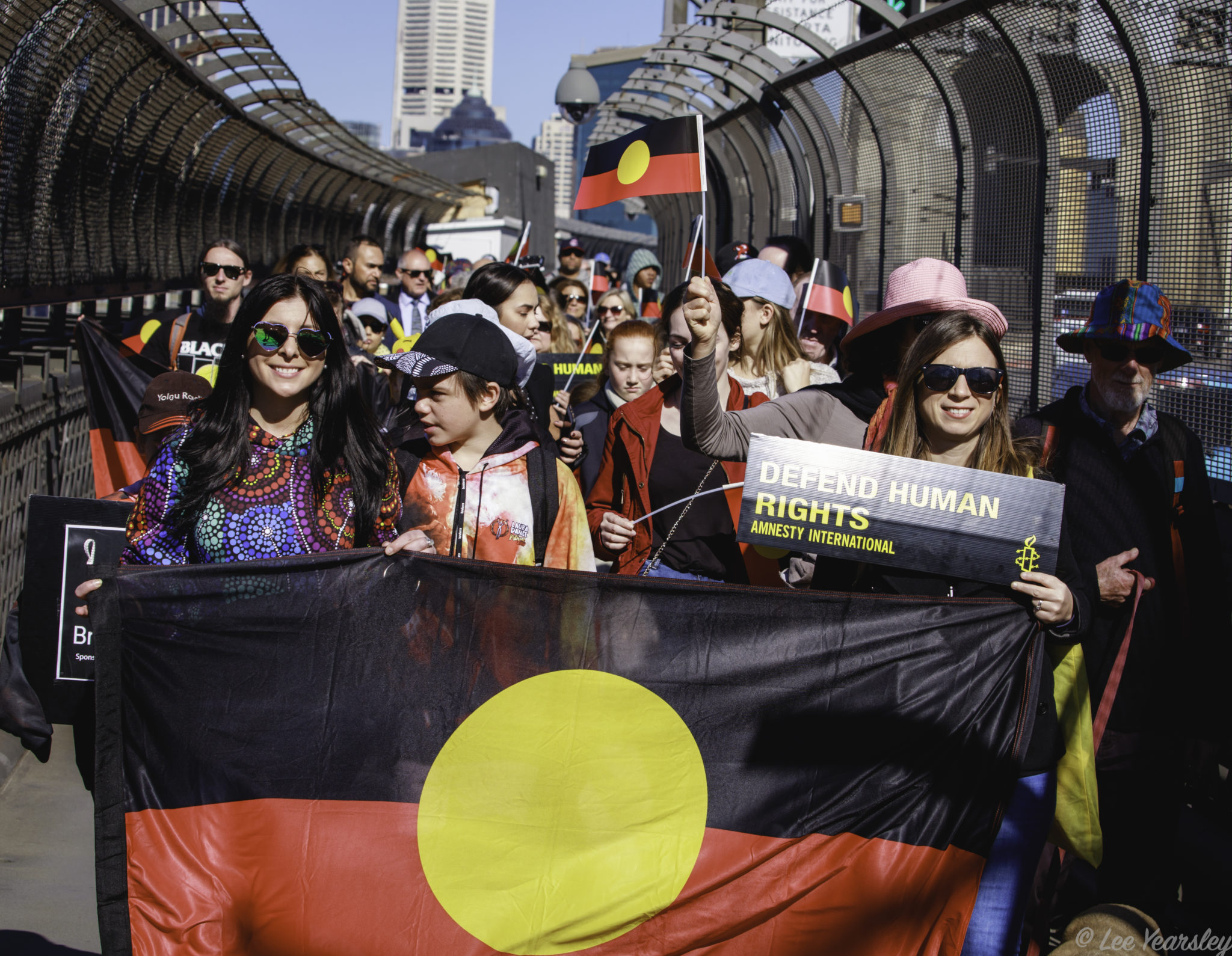
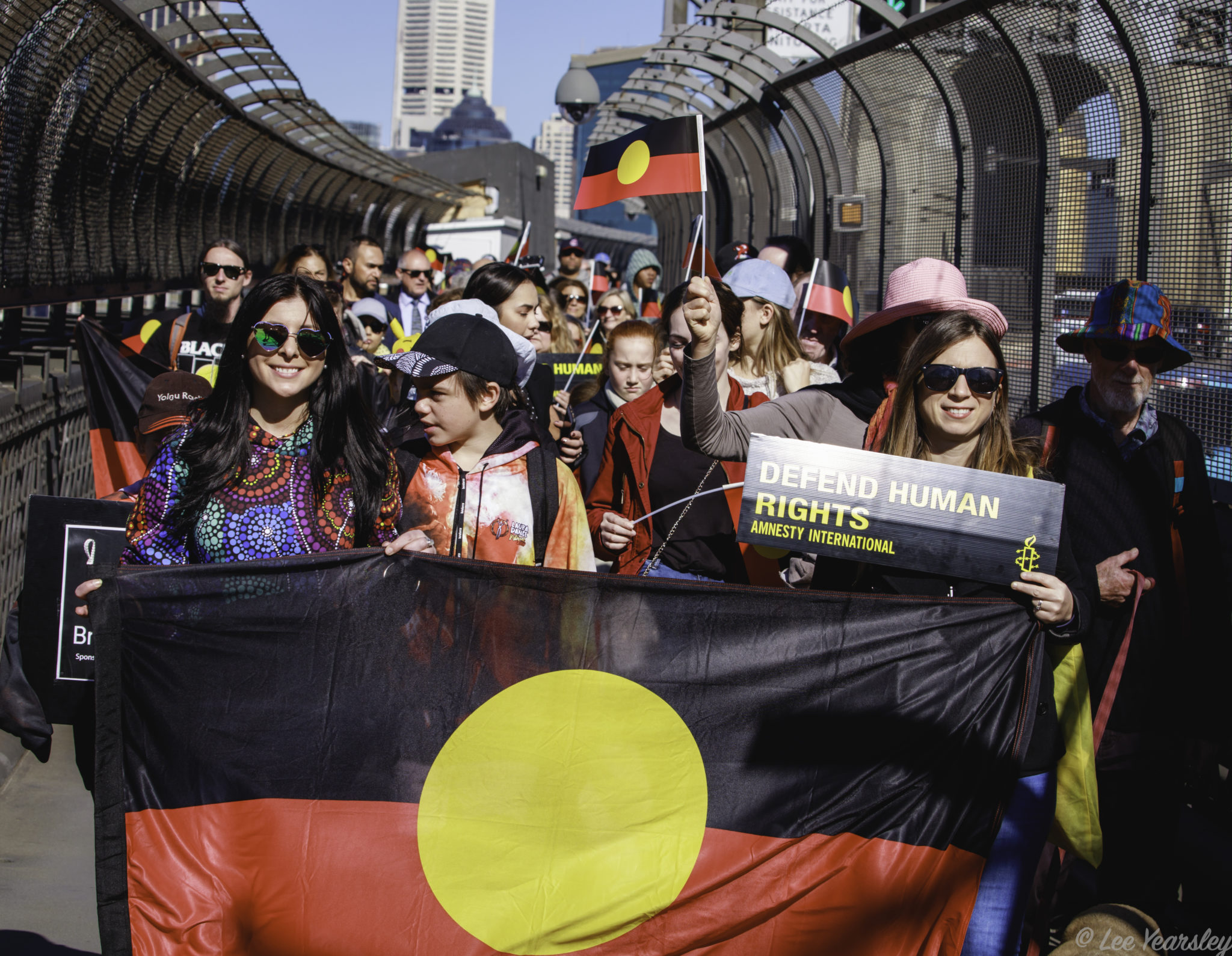
29 April 2026It is Tuesday, 26 January 2026, the last week of my semester abroad in Melbourne has begun. It is also Invasion (Australia) Day; the date that marks the arrival of the first British settlers in Australia. A friend has invited me to come to a demonstration in front of the Victorian Parliament. Not sure what to expect I get there. And with me, approx. 17,000 others arrive, carrying signs, starting chants, greeting friends, handing out pamphlets and flyers. Others hurrily search for a place in the shade, preparing to spend the next one to two hours listening to speakers. Volunteers hand out water free of charge. The feeling of one communal goal, pride and also anger linger in the air. Like in Melbourne, there are hundreds of rallies all over the country on 26 January 2026. Were in 2025. And will be in 2027. All are united by the colours black, red and yellow. The choir shouts
"Always was, Always will be, Aboriginal Land”.
Darling Symbols
What has been episodically sketched above is a typical example of social movement activity. A movement typically consists of
“(1) a collective attempt to bring about (or resist) social change (2) by a network of groups and organizations that, (3) resting on a sense of collective identity, (4) present themselves primarily via public protest “(Rucht, 2023, p. 18).
The scene above illustrates precisely these elements: a large network of individuals temporarily forms a collective actor, unified through shared claims and visible markers. Building on Durkheim, Awad and Wagoner (2020) additionally argue that people are bound together in groups by rituals and symbols. This claim is hardly surprising when one considers religious customs or, more down to earth, the experience of attending a demonstration, which unites people through the collective chanting of common claims and the individual experience of seeing someone else wearing a pin with the same First Nations flag oneself sports on their t-shirt. The power of symbols is deeper than just connection, though. They motivate people on an emotional level to join and stay with the cause and serve as identity bases in these spheres (Awad & Wagoner, 2020). Very simplified one could say:
Since I support the First Nations’ claims of sovereignty, I bought and wear a pullover with corresponding colours and symbols.
Because I bought and wear a pullover with these visuals, I support the First Nations’ claims.
Of course, these symbols are not static. How everything in life, they are put into the world and evolve, they get interpreted and reinterpreted, at times eradicated. Maybe because the movement’s goals have shifted, the goal was achieved or the movement falls apart altogether. Maybe because the symbols can be adopted by other causes, too. If its diffusion and its passage into the collective memory are strong enough, they might become umbrellas all sorts of issues find shelter under (Awad & Wagoner, 2020).
Doing Stickers, Doing Politics
Beyond massive demonstrations, there are other ways to be heard: one of them is political stickers. Awcock (2021) defines protest stickers as “are used to express opinions on a whole range of topics”, going as far as to claim that “they are a staple of contemporary repertoires of protest” (both 523), seldomly used to market events. Bodden & Awcock (2024, 131) elaborate that “ […] political stickers are taken to be symbols with essentially transparent meanings and political intents and effects, such as persuasion”, giving the sticker-employers more agency than simply voicing opinions into the void. However, not only the sticker itself, also the spatial context makes meaning: Awcock (2021) for instance recounts encountering anti-McDonald stickers in front of two different franchises in the UK. On top of that, a political sticker’s work is not over once it is placed. Others may write or draw on it, tear them down or put another sticker on top. Through this interaction, ‘doing stickers’ cannot be detached from doing politics (Bodden & Awcock, 2024). The political sticker typically promotes or protests an ideology, a state, a party or another political entity. Nevertheless the cause, a challenge emerges: entire libraries have been filled with political arguments and counter thoughts. How does one translate their claims on such a small surface? By boiling one’s ideas down to the bare essentials, e.g., through the use of symbols. This approach can be seen in many pro-Palestinian stickers that simply show the national flag and other symbols like the raised fist, a historical symbol of resistance and uprising. I have qualitatively observed, these often appear in clusters and are subject to being covered up by rival political content or torn down like sports fans stickers.
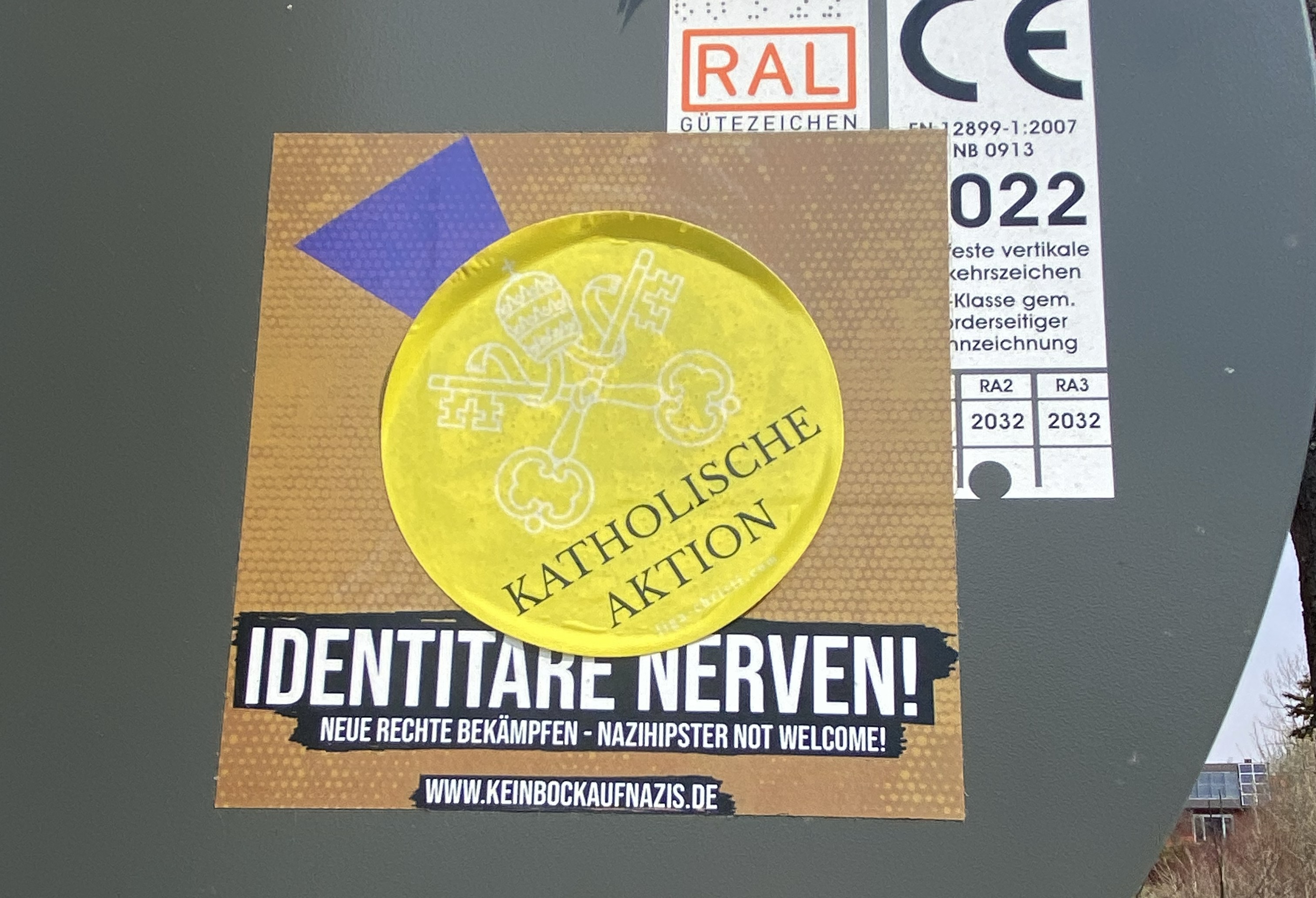
The photo of Katholische Aktion [Catholic Action] on top of Identitäre Nerven! [Identitarians are annoying!] illustrates this phenomenon: The lower layer advocates against the Identitäre, a Neo-Nazi organisation that tries to appeal to a young, liberal audience. This is why they are called “nazihipster”. The Katholische Aktion, however, appropriates the layout and wording associated with left-wing/-extremist groups under the label of Antifascist Action; hence they captured a concurring political design to make a statement against like-minded statements against right-wing activism. This layering demonstrates that political conflict is not only carried out through explicit messages but also through the appropriation and contestation of symbolic forms and visual language.
Conclusion
The Invasions Day demonstration illustrates how collective identity is not only expressed but actively produced through shared symbols, rituals, and spatial practices. The chants and visual markers observed at the rally are not merely representations of political positions; they are constitutive elements that bind individuals into a collective actor. Political stickers operate in a similar but more dispersed way. While the demonstration creates a temporary, concentrated space of political expression, stickers extend these dynamics into everyday urban environments. They translate complex political claims into condensed symbolic forms and embed them into specific locations, where their meaning is shaped by context and interaction. As seen in the layering, removal, and alteration of stickers, these symbols remain contested. They are continuously reinterpreted and challenged, turning public space into an ongoing site of political negotiation. In this sense and stickers are not only tools of communication but practices through which political identities are performed and fought over.
Sticky Individuality in Art
21 April 2026the Whimsical Grasp for Control
A social media trend that has been hard to miss recently is the idea of “being more whimsical” or learning to “romanticise your life”. Especially among young women, creators share small ways to make everyday routines feel a tad more magical. This can be as simple as swapping out a plain button for a decorative one or turning mundane habits like doing laundry into something intentional and aesthetic. Basically a blueprint for whimsification from the early 2000s is Gilmore Girls’ Lorelai Gilmore: It is easy to spot fuzzy, purring alarm clocks or rhinestone’d hammers on her mental shelf of playfulness.

A similar energy runs through the content of Nara Smith, where even something as basic as making mayonnaise becomes a slow, meticulously planned and curated experience. What both capture is not just a preference for beauty but also a desire for control evoked in their audiences. In a world shaped by crises like rising costs of living and climate change, most people know that they cannot influence the bigger picture. They can, however, shape their immediate surroundings with very small, very manageable things. An exemplary practice – you guessed right – is the use of stickers, as they sit at the intersection of art and everyday life in a way few other art forms do.
The Artist
They are, in many cases, carefully designed and crafted by artists who have to work within strict limitations: small formats and specific materials, next to keeping in mind the stickers’ final surfaces they ultimately have no control over. Whether printed on transparent foil, holographic material, or matte paper, as well as colours (some fade quicker than others due to UV radiation), fonts, and text – every choice affects how the design will later exist in the world, outside the controlled, traditional space of a portfolio, gallery or screen. A sticker also has to work quickly through adaptibility and striking features. Moreover, putting their own stickers up can be seen as the ultimate claim to the city. Transcending the tourist sticker’s idea of ‘I was here’, a tag’s constraint of being signature-based and fans’ claims of loyalty and identity, they conceptualise their vision of their surrounding built environment and the society they live in with their very own portable marker, informed by their creative capabilities, identity, political ideas and aesthetic sense. Additionally, they can be accessible to put artworks, once crafted on another medium, out there. For many artists, stickers are, hence, not an afterthought or a piece of merchandise tacked onto their “real” work but a complementary art form.
The Curator
If the artwork does not stay with the artist, it is completed by the person who uses it. Once it is placed on a laptop or a water bottle, the adhesive becomes part of a larger composition, like an open scrapbook; people rarely stop at one but arrange and layer. These handy objects-turned-curated-surfaces then say something about the person carrying them around. Interests, humour, political views, and aesthetics are all getting compressed into a collage, with the latter obviously being the easiest to spot.
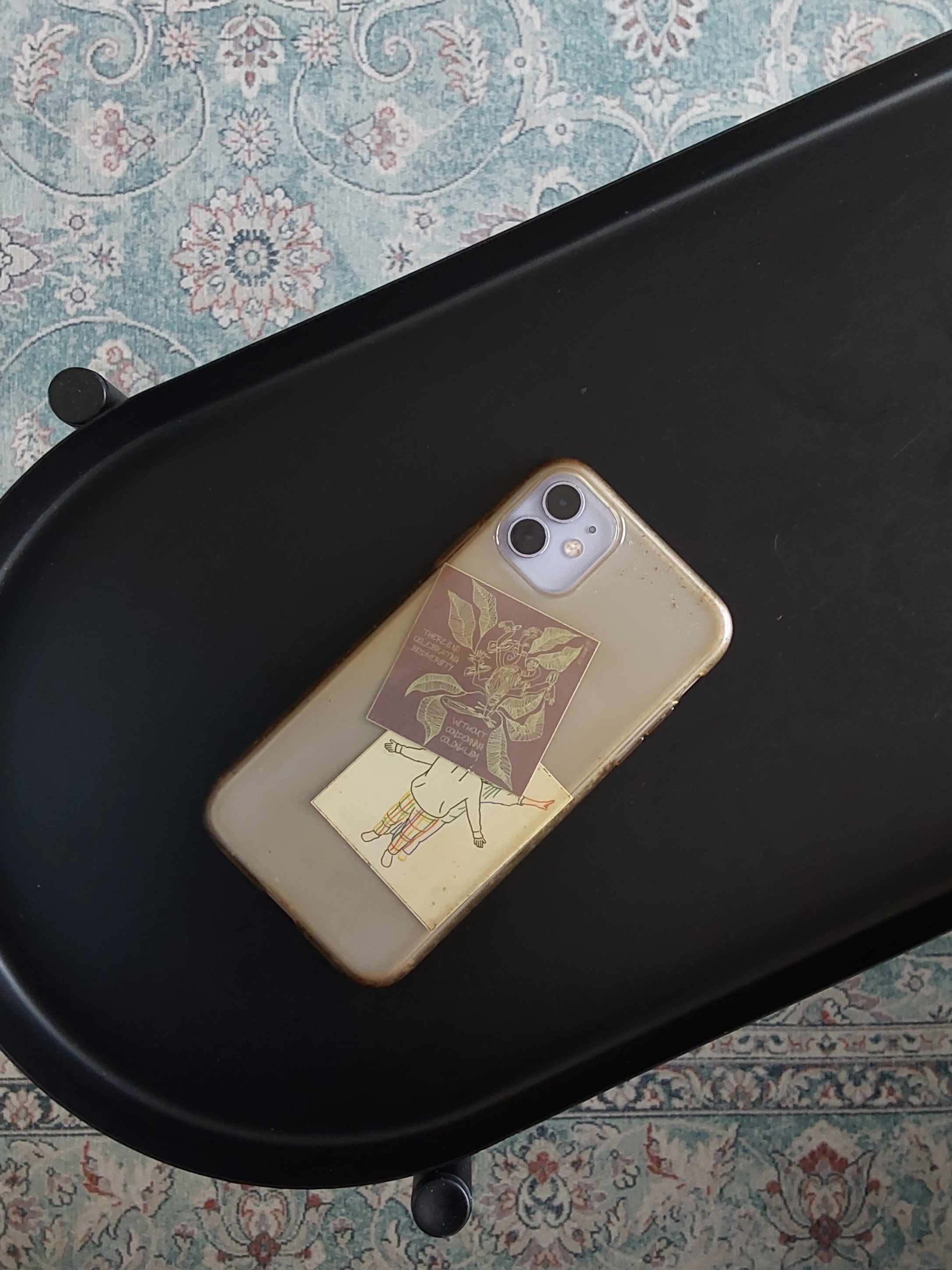
Importantly, this practice is reversible and expandable wholly to taste and therefore very low-stakes. What is whimsical today does not have to be tomorrow. Hence, this low threshold is exactly what makes stickers so compatible with the desire to romanticise everyday life. Not everyone will or can redecorate their entire room or develop elaborate routines, but almost anyone can place a sticker. A plain object becomes a bit more personal, slightly more playful. For instance, a laptop’s function as a workspace gets expanded to make you smile about some of the art you placed on it every single time you open it.
Parts Comprise the Whole
When discussing the customisation of personal items, it is not far-fetched to connect stickers to the broader culture of individualism in Western societies and the idea that said identity should be expressed outwardly: through what you wear, what lifestyle you implement, who you love, and choosing careers intrinsically. Putting up stickers offers a particularly accessible way to do so; there is no need for any skills or significant money. You simply select and arrange however you please. Of course, putting aesthetically appealing stickers onto your latest Stanley cup or phone is not purely about self-expression or enjoying others’ work. Trends play a role in identity construction, and so do ideas about the looks of subcultures and individuality. Accordingly, the slope of enjoying art to just another form of consumption is indeed slippery. At the end of the day it is clear that artsy stickers are more than decoration. They are small, affordable artworks whose meaning is dually constructed, both by creators and users (and perhaps by other recipients; go easy on the suggestive content in professional settings, okay?). And in a cultural moment that tells people to aestheticise and personalise their lives, they offer one of the simplest ways to do exactly that, just one adhesive away.
The Tag
14 April 2026The Urge to Leave a Mark
Paintings on walls are as ancient as humankind itself. People have always longed to leave traces behind, whether in the form of a handprint or a hunting scene. Most people have likely encountered images of such markings at some point. Once written language was invented, this practice naturally evolved, too. Instead of leaving only visual imprints, persons could now inscribe phrases and, perhaps most personally, their names onto their surroundings. After the graffito, literally meaning to engrave, hollow, or scratch (Bisceglia et al., 2022), the tag was born: a signature in the broadest sense.²
After a quick ride on the time machine, we arrive in New York around 1970 to meet Demetrios, better known as Taki 183, who became famous as the father of modern graffiti by leaving his tag across the city’s subway system. As more and more people joined in on repeatedly leaving their signatures throughout the Big Apple, and as tools improved, tags became increasingly intricate (Li, 2025; Valjakka, 2015; Young, 2014).
Writing the City
The specific design of a tag depends not only on the artist’s skill set but also on their intentions. A so-called bomber, whose aim is to produce as many tags as possible in a short amount of time for maximum visibility, may favour a plainer style. The same applies to artists whose tags are intended to be easily deciphered by a broader audience. At the same time, a tag can also take the form of a clearly branded symbol or a stencilled image (Young, 2014). As the saying goes, there is no accounting for taste, yet these early taggers undoubtedly deserve credit for helping to establish and spread free, publicly accessible art. Without dwelling further on the art of spray-painted graffiti,³ the bridge to stickers emerges quickly. Stickers became a popular and commercially successful tool shortly before tags in the 1960s and often circulated within similar subcultures (Vigsø, 2010). Much like tags, they can be placed rapidly across urban space. Moreover, unlike large wall-spanning graffiti, small sprayed tags, marker tags, and stickers alike can be applied to almost any man-made surface, claiming the city either in a territorial way, as also seen with sports fans, or as a canvas, centimetre by centimetre (Young, 2014). Young (2014) goes as far as to say that “[f]or many street artists, the sticker acts like a tag: the artist will put up stickers in the same way that a tagger writes on a surface” (13).
My Name Is
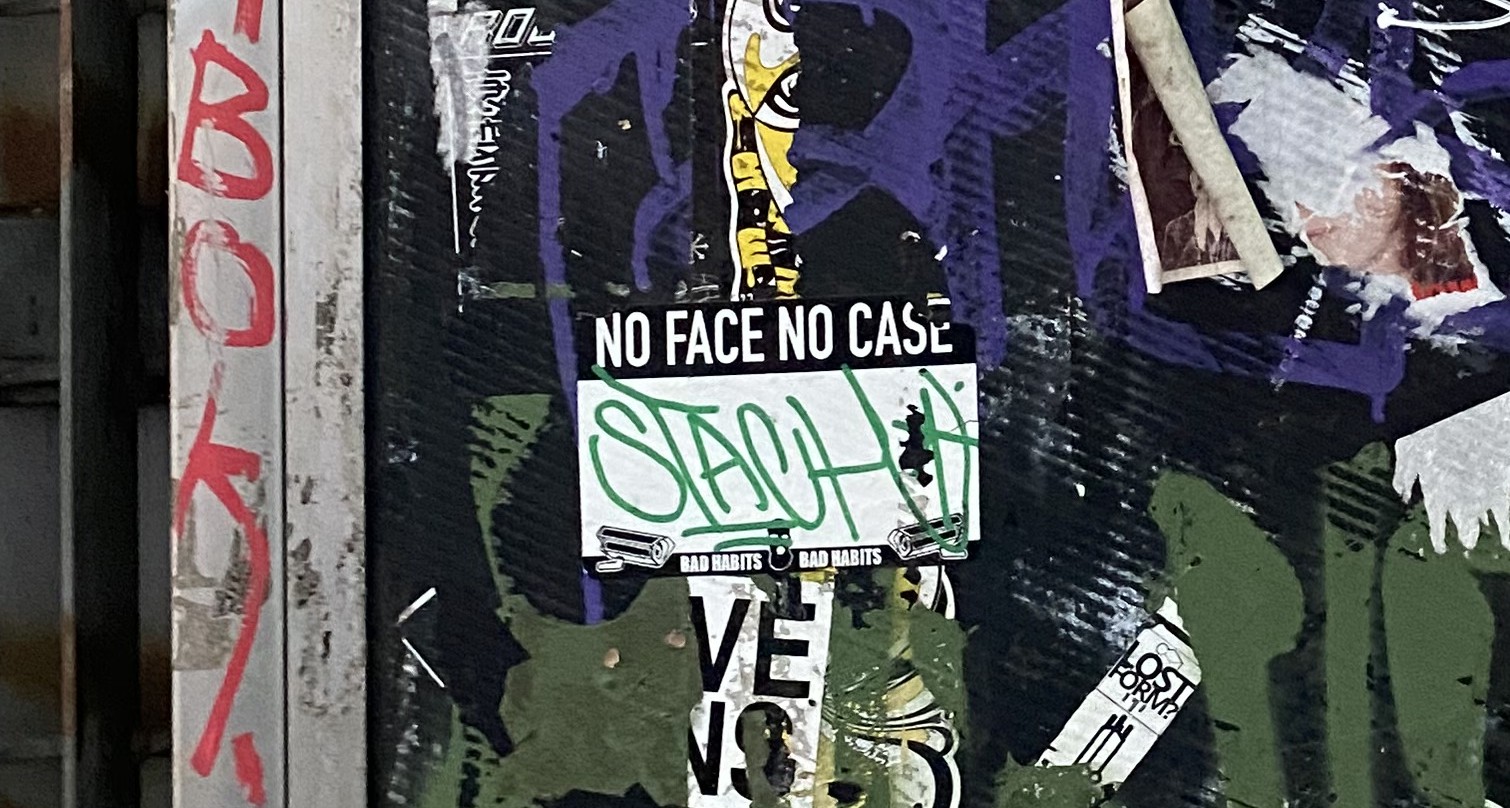
It therefore seems only natural that some taggers transfer their tags onto stickers as well. In this form, their work can be traded, collected, and preserved, unlike its ephemeral wall-based siblings. For bombers in particular, the use of stickers can significantly speed up their process, allowing for greater impact over the course of a single night (Young, 2014). Stickers also make it possible to mark surfaces that would otherwise be difficult or impossible to reach with a pen or spray can (Photo 1).
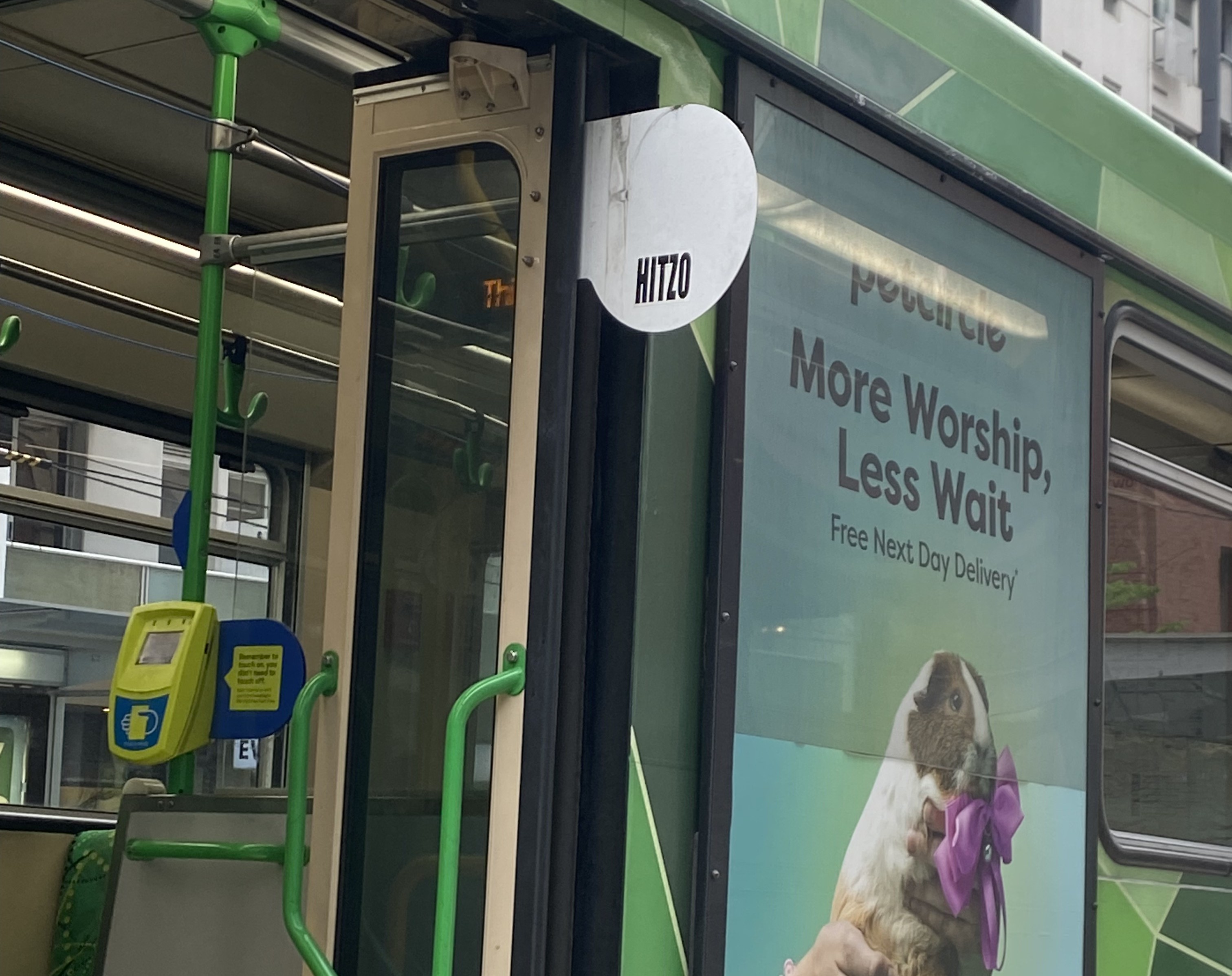
Beyond practicality, stickers offer street artists another low-cost medium through which they can experiment, either for its own sake or as a way of expanding their skill set and vice versa (Young, 2014). Moreover, the use of tag stickers may even help mitigate legal consequences (Li, 2025), as spray-painted graffiti and stickers can be treated differently depending on the legal context, and where there is “no face there is no charge. That aside, and although stickers are generally smaller than a tagger’s usual canvas, they still leave room for creative expression. The most striking distinction lies in whether a sticker is hand-crafted or printed. Printed stickers reproduce the same image repeatedly and likely serve bombers above all. Hand-crafted versions, by contrast, were inspired by postal address labels and introductory “My Name Is” stickers commonly used in the United States (Li, 2025). This gives them a distinctly personal quality and, when taggers remain within this aesthetic, often an ironic undertone as well.
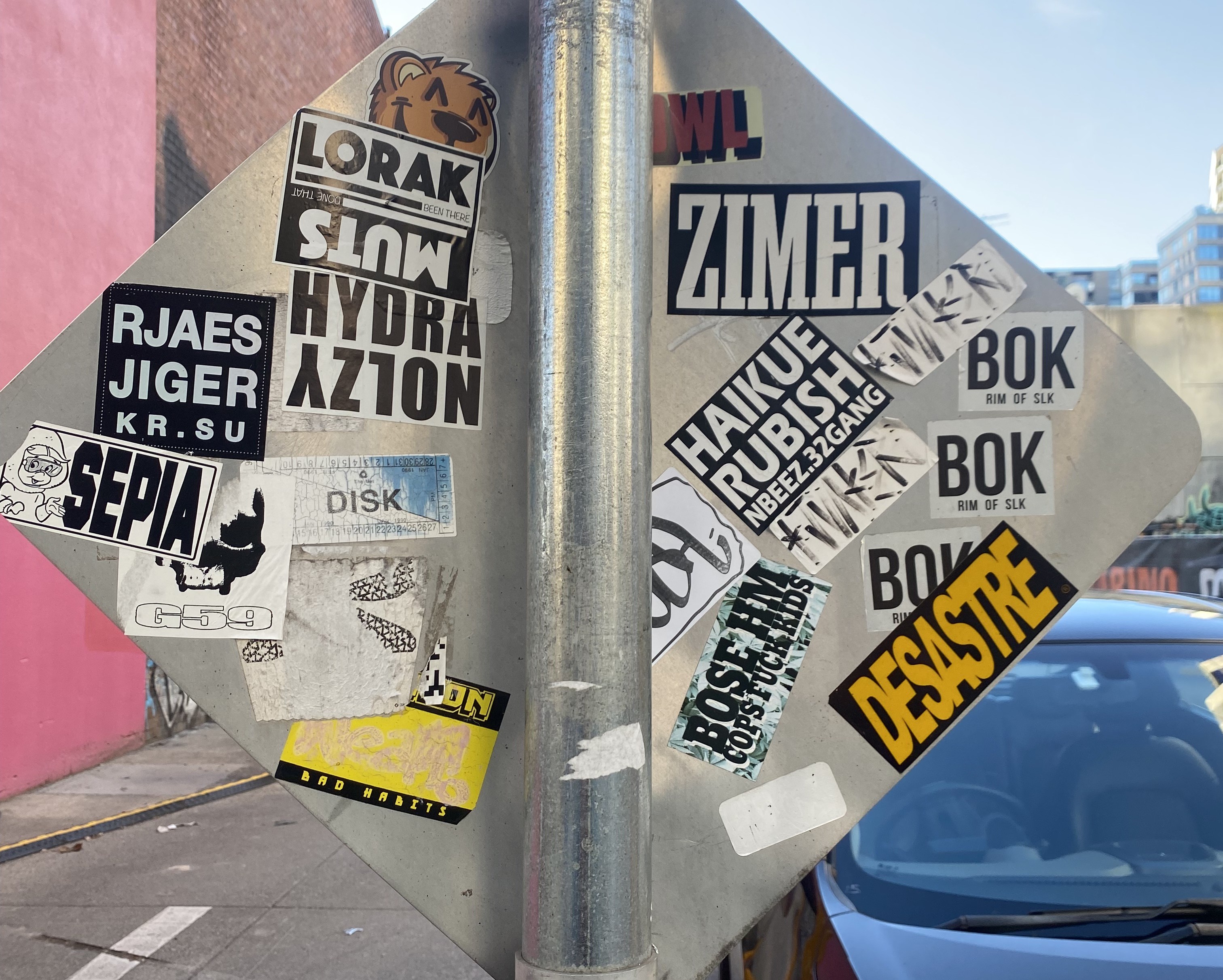
From this, Li (2025) then goes on to argue that, grounded in American spray-painted graffiti and shaped through a fusion of materials, the Australian Melbourne sticker emerged as a distinct form. While the author does not elaborate further what that is or how it came into being, the city itself offers a clear illustration. Stickered tags are a common sight. They appear on traffic poles, windows, street signs, and hydrants, often in clusters rather than as isolated interventions . Over time, these surfaces seem to turn into meeting points of different pseudonyms, placed alongside one another (Photo 3). While usually legible, the stickers remain encoded, since they only display a pseudonym. In that sense, they are visible without being fully readable in terms of identity.
Still Here
Looking back to the earliest forms of marking, there is seems to be a continuous impulse to leave something behind. Even today, despite an abundance of possibilities, one of the simplest forms remain persistent: a name without further, repeated across the city. Tag stickers extend this logic beyond spray paint. They make the tag more mobile, and more consistently repeatable. Therefore, tag stickers are not simply decorative additions to the city. They are repeated signatures placed across urban surfaces, forming a kind of low-level visibility that does not resolve into a clear identity.
The Sports Fan
07 April 2026Football (soccer in the US and other places) is the most popular sport worldwide, and especially in Europe (World Population Review, 2026). Accordingly, its popularity has led to intense fan cultures that not only happen around matches, but also bleed into fan club rivalries and territorial conflicts, too. Therefore, they serve as an obvious example when talking about the relation between sports and stickers.
Kick-Off
In general, footie stickers typically appear en route to the next match, e.g., near local train stations, but are also used to establish dominance over other areas. Vigsø (2010) called this behaviour tribal demarcation: prone-to-violence ultras address fellow fans and opponents in their own and by their adversaries claimed neighbourhoods. Papoutzis et al. (2014) describe this phenomenon regarding fans of Aris FC as "a coded, agressive and propagandist discourse of persuasion and domination" (2014, 663). In the latter case, that matter is mostly directed at the fans of the selected opponent POAK. In line with both authors above, Wachendorff (2024) finds in their analysis of football stickers (N=1000), placed in two North Rhine-Westphalian cities in Germany, that football stickers also serve as territorial and group identity marks among fans through loyalty to a club and that stickers of the respective local club dominate the area by far (82% for BVB-Dortmund in Dortmund; 80% Rot-Weiss Essen in Essen; Section 5.3 Football). It has been additionally reported for said cities that placement of stickers diverging from the common opinion can even result in so-called 'home visits', supposedly physical altercations between fans (Wachendorff, 2024).
Club Colours
Wachendorff (2024) and Papoutzis et al. (2014), furthermore, point out that fanmade stickers often carry strong emotional messages of love, passion, and opposition; linking the fan, fan club, and football club without any further subtext to speak of. Besides, the type of lettering, specifically the use of serif typefaces, plays into this affective behaviour, creating "a sense of intimacy like a love letter" (Wachendorff, 2024, Section 5.3 Football). Paputzis et al. (2014) analysed the Super 3 fan clubs', which are affiliated to Aris FC, use of stickers (N=79), which typically consist of the spatial code of the local fan division, the Super 3 logotype and another dominant element like a person or a group of people; an object like a geographically important building to the subdivision; or an animal like the bulldog. Supposedly because of traditional marches before and after games of Aris FC, stickers typically show people (66%), who, in combination with text and other symbols, appeal to the audience to take action against other (fan) clubs. While landmarks highlight the geographic attachment of subdivisions at first glance, they are used to tie local fan groups to the greater organisation as well, feeding into earlier-mentioned ideas of collective identity building (percentage not given). Lastly, in 58% of all cases, the fan clubs used a stylised bulldog that carries symbolism of "the club's strength, pride, determination and bravery and, above all, its dedication and loyalty to the football team" (Papoutzis et al., 2014: 656). Additionally established symbols at Super 3's hands are the club's colours (found on 96% of the database) and its patron, Ares, the god of war. Virtually all stickers are either in Greek, English, or both (17%; 31%; 51%; Papoutzis et al., 2014, 658). Wachendorff’s text also suggests that soccer stickers are primarily manufactured in German and English (2024, Section 3 Stickers in Comparison to Other Signs). Vigsø (2010) solely states that stickers commonly display club colours and the hooligan club's name and logo. They conclude that stickers seem to only appeal to scene insiders, and their main use is a spatial and visual translation of the struggles between hooliganism groups. A recurring theme across this type of literature is that the territorial logic of fan stickers is inherently relational: claims to space that elevate a fan clubs visibility, potentially inviting contestation.
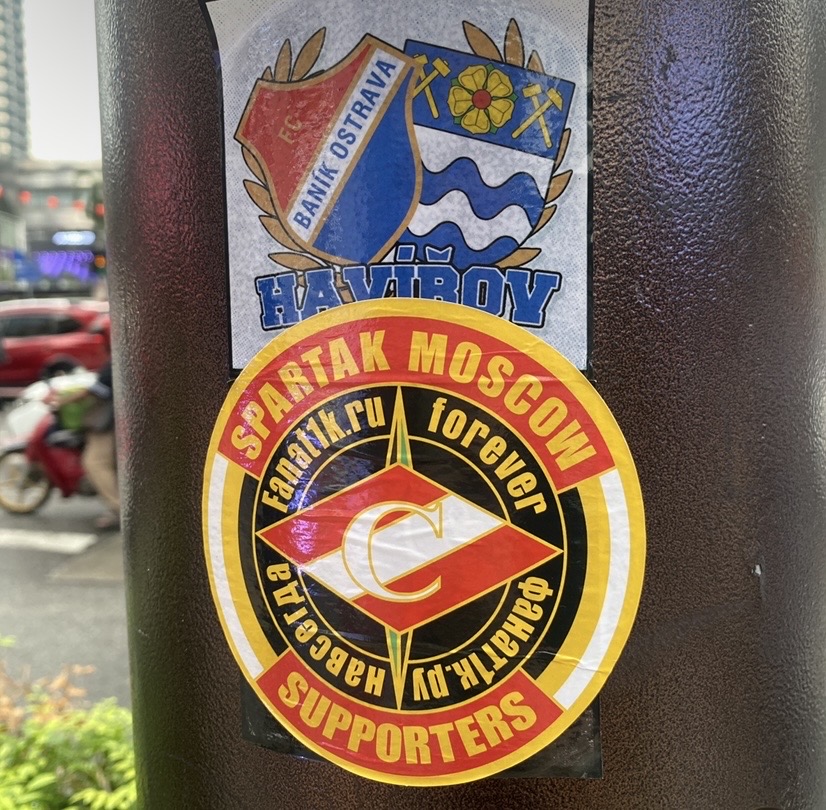
Building on Papoutzis et al.’s (2014), Vigsø’s (2010), and Wachendorff’s (2024) findings on dominance, group identity, and spatial marking, my own data collection from the past two years similarly suggests that sports club fans are among the most active producers and placers of stickers in public space. These stickers frequently appear layered over those of rival fan groups, indicating an ongoing visual struggle over symbolic dominance of a place. At the same time, different fan groups appear to operate on distinct levels of visibility and communication from my observation. While more general fan stickers (either fan-made or officially issued) often rely on club colours, their logos, and broadly affective messages of loyalty, ultras and hooligan circles tend to employ coded references, such as the stadium curve from which they typically watch the match. Such codes function simultaneously as markers of in-group belonging and as instruments of intimidation directed at outsiders, without necessarily addressing them. Important to keep in mind is that even though individuals put these stickers up, the act truly is about belonging to a football (fan) club: neither in the reviewed literature nor in my own data is a sticker that explicitly states personal sentiments, unlike, for instance, a tourist sticker. My own data further tentatively suggests that this form of sticker-based territorial marking is particularly characteristic of European football fan cultures. Hence, it is unclear how cultures with different preferred sports act.
Final Whistle
In conclusion, sports fan stickers function as far more than decorative expressions of club support. As the literature and my own observations suggest, they operate as visible markers of territoriality, collective identity, and emotional affiliation within fan cultures. By claiming public space, often in direct competition with rival groups, these stickers transform everyday spaces into symbolic landscapes. At the same time, their visual language, ranging from official club colours and logos to more coded references used by ultras, reinforces boundaries between insiders and outsiders, often through emotionally charged language.
The Advertisement
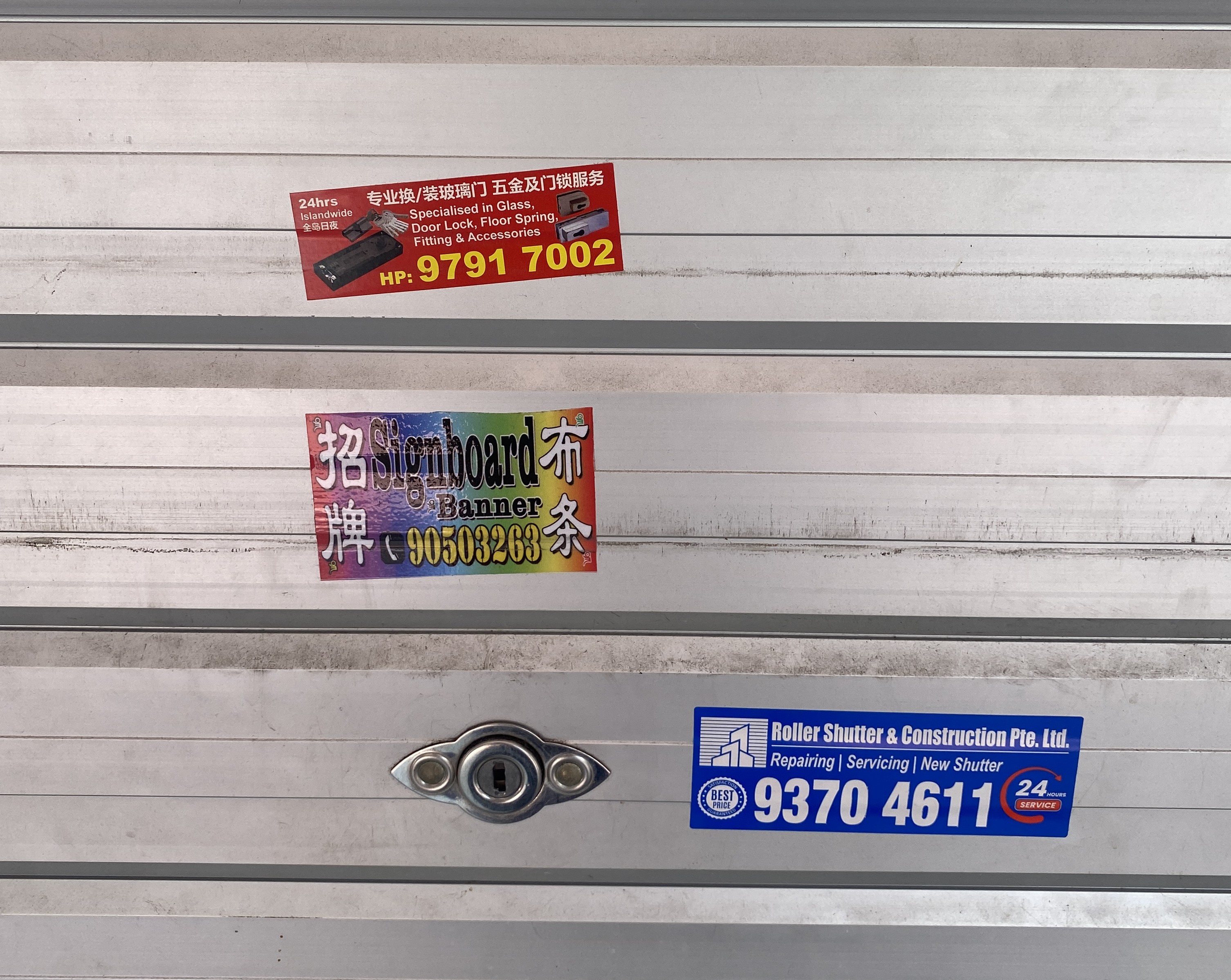
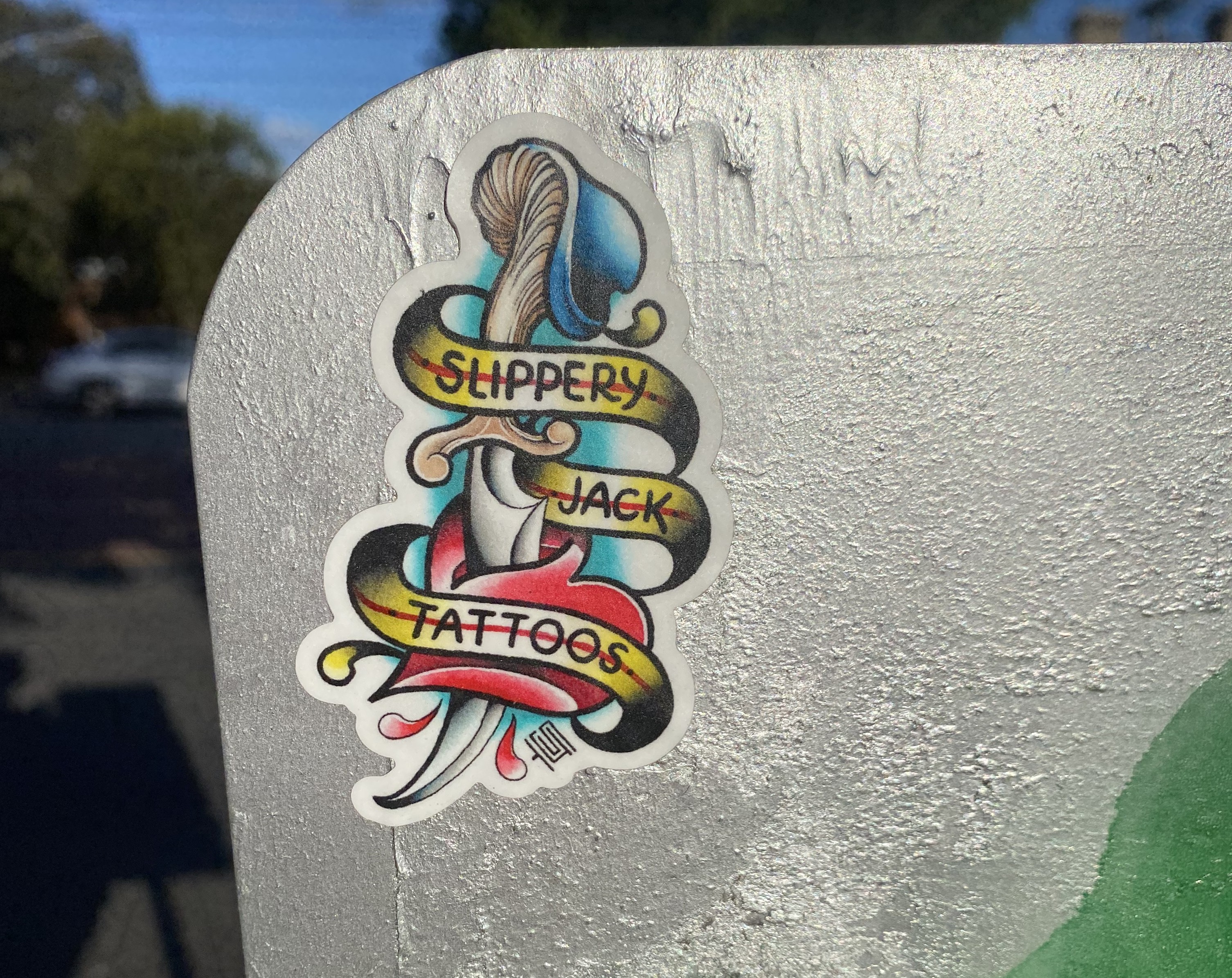
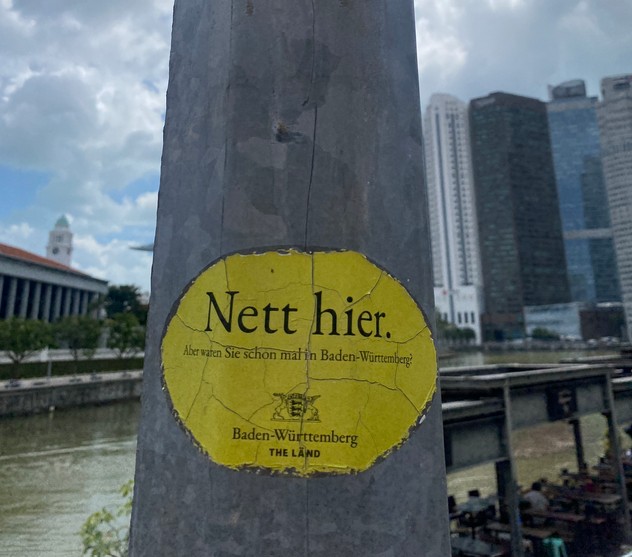
31 March 2026This one might not be too on the nose: although stickers have been accessible and ready to be mass-produced ever since the invention of the ink-jet printer, they have somewhat failed to be recognised as a standard tool for advertisement, unlike billboards or flyers, likely due to their historical connotation with use and reception by young people and subcultures (Vigsø, 2010). Despite this relative neglect, companies have nonetheless made use of these easily produced and cheap advertising spaces. They typically contain the company’s logo, name, and a means of contact, along with either a commonly associated symbol, a work sample, or a depiction of the finished product. Generally speaking, they are rarely covered up, except, perhaps, by rival companies. While scanning anything you see on the streets is discouraged (after all, a QR code could contain a virus or trojan), cleverly designed and strategically placed stickers are nonetheless a great way for companies to boost brand awareness and spark interest in a product among prospective customers. An example of this is the commonly found placement of roller shutter repair service stickers on garage doors in Singapore, reinforcing the service’s usefulness. At the same time, the way stickers are employed differs across regions. As seen in the example, in South East Asia they are often a straightforward listing of the service, with no frills and a phone number, mostly for handyman services or website design. In Western contexts, such as Europe and Australia, the design is typically more sophisticated and generally aimed at an “alternative” clientele that might be interested in tattoos, start-up or tech services, niche magazines, or queer events.